Analogous Shifts: NGSS and the Hubble Space Telescope

This past March, I attended the National Science Teachers Association’s National Conference on Science Education in Chicago. For the past few years, most sessions have revolved around helping teachers understand, and apply, the Framework for K-12 Science Education (NRC, 2011), and the Next Generation Science Standards: For States, By States (NGSS Lead States, 2013) in their classrooms. National leaders such as Stephen Pruitt from Achieve, the organization tasked with writing the standards, and Brian Reiser, from Northwestern University, shared lessons learned since the NGSS were published in April 2013.

One of the primary shifts taking place as teachers learn about and implement the Next Generation Science Standards (NGSS) is from having students learning about a set of topics to figuring out and explaining phenomena. Through the use of scientific/engineering practices and a coherent storyline of investigations, students gather evidence to build explanatory ideas to answer questions about phenomena. The storyline for an individual unit could begin with an anchoring phenomenon, which gives rise to a driving question, followed by a series of sub-questions and phenomena-driven investigations. A set of performance expectations lay out what a student should be able to do at the end of a course of instruction. In short, the science/engineering practices are the tools to enable the students to construct explanations and design solutions.

For example, middle school students will have to “Develop and use a model of the Earth-sun-moon system to describe the cyclic patterns of lunar phases, eclipses of the sun and moon, and seasons.” (NGSS Performance Expectation MS-ESS1-1) This performance expectation specifically calls for students to engage in the science practices of developing and using models, and analyzing and interpreting data, while utilizing the crosscutting concepts of patterns, and scale, proportion, and quantity. Configuring the components of a physical model to display the geometry of the Earth-sun-moon system also incorporates an engineering design component as the students create a 3-d model they can manipulate to gather evidence to support their explanation of the cyclical phenomena of lunar phases and eclipses.

At the same time as these large shifts are taking place in the science education community, this spring the astronomical community is celebrating the 25th anniversary of the launch of the Hubble Space Telescope. Following its launch on April 24, 1990, the Hubble saw first light on May 20, 1990. As reported elsewhere, Hubble was launched with flawed optics, requiring an engineering fix to take full advantage of its position in Earth orbit.
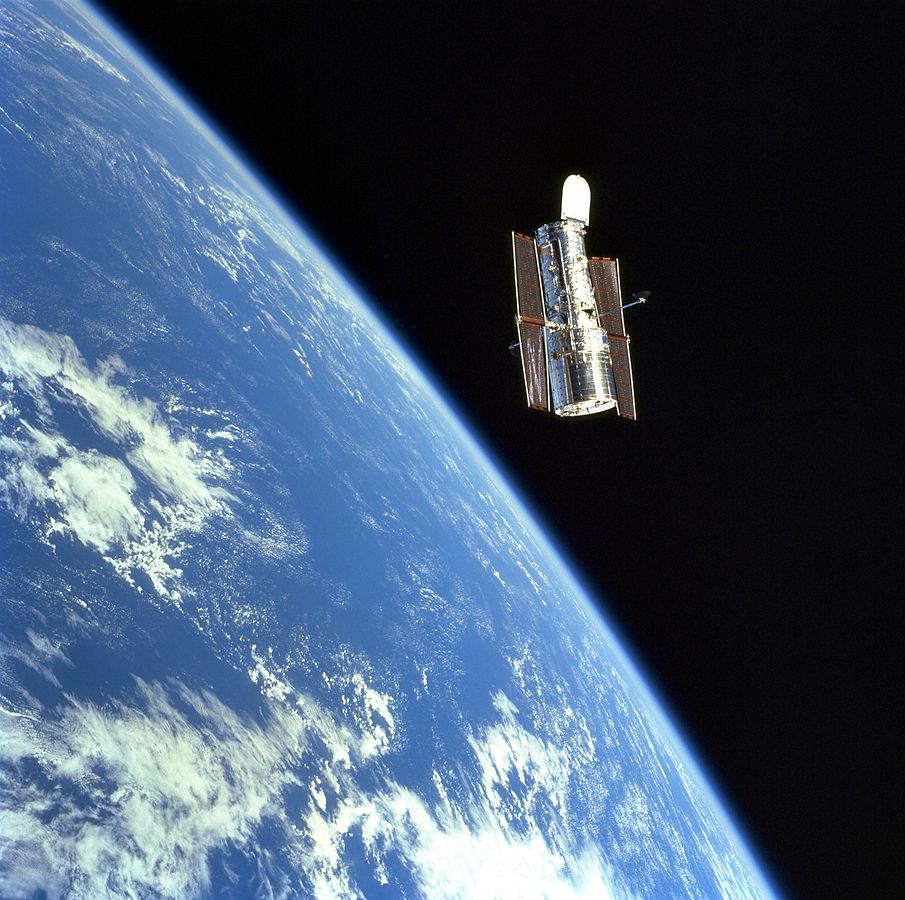
Image: NASA

Image: NASA

The Hubble Space Telescope brought about a very large shift in how astronomers investigated phenomena before and after deployment. Prior to Hubble, much of astronomy was cataloguing objects, and speculating on their nature without the kind of direct evidence astronomers needed. The advent of the Hubble Space Telescope finally gave astronomers the tool they needed to collect the data necessary to develop more accurate descriptions of star formation, galactic evolution, and the nature of the early universe after the Big Bang. Much of this work is connected to the driving questions of how old is the universe?, and how has the universe evolved over time? Hubble data has helped to answer these, and many other questions, along with discovering previously unknown phenomena.

Hubble Deep Field Image: NASA

Hubble Deep Field
Image: NASA

Like contemporary astronomers, K-12 educators are making similar shifts in how their students experience science in the classroom. Instead of memorizing and cataloging facts, students are asked to develop explanations from real data, create mental models to explain what they observe, and develop logical conclusions and arguments., In fact, Hubble data and images are useful to students for not just learning astronomy, but developing the scientific thinking skills the researchers used to make the discoveries in the first place   Rather than merely identifying an image of a planetary nebula or a galaxy, students can now investigate in some detail the processes recorded in the image, discovering their context within the greater cosmos.

The additional object lesson for students is how engineers solved the problem with Hubble’s optics, and designed a fix to allow the telescope to obtain the kind of data it was designed to collect. Of course the whole concept of placing a telescope into orbit beyond the atmosphere was a designed solution to the problem of trying to completely study objects through atmospheric distortion and filtering of important wavelengths of light. In some ways an engineering process analogous, albeit far more complex, to a student’s quest to design and build a better means of protecting an egg when dropped from a height of several meters.

What this really says is a teacher implementing an instructional model grounded in the Next Generation Science Standards is a powerful tool to help students achieve competence in engaging in scientific and engineering activities, much as the Hubble Telescope is a powerful tool for astronomers. The ultimate result are more scientifically literate adults, some of whom will go on to design future generations of space telescopes, making discoveries we cannot even imagine today.

A version of this post originally appeared as the Education Matters column in the spring 2015 issue of Mercury, a magazine published by the Astronomical Society of the Pacific.
Posted in Astronomy, Education Matters, Science Education | Leave a comment

How to Have a Personal Experience with the Universe

One of the programs I manage at the Astronomical Society of the Pacific (ASP) is Project ASTRO.  The basic idea of Project ASTRO is to partner volunteer astronomers with classroom teachers.  Each astronomer visits their teachers classroom multiple times during the school year.  A number of partnerships have endured for many years, adding to a cumulative impact of touching the lives of thousands of students.  It turns out amateur astronomers do just as well at sparking students’ interest as do the professional astronomers.  The really important part is in giving students the opportunity to personally engage in activities to connect them to the universe, whether in the classroom or at evening star gazing events for families at the school.  The experiential aspect of Project ASTRO is just an example of the importance of personal involvement in science.  Students have a better understanding and appreciation for not just astronomy, but for science in general.

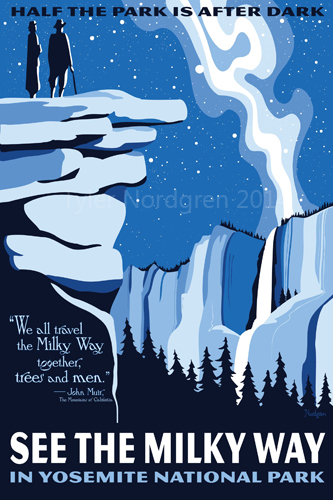
Another program at the ASP is Sky Rangers.  This program has worked with park rangers in national and state parks to help them incorporate more interpretive programs relating to the night sky.  One of the unplanned for results of creating parks to protect sites of natural and historical importance is to also create islands of darkness.  With little commercial or residential development in parks, artificial lighting is relatively scarce, and what does exist is usually designed to minimize the impact on the darkness of the night sky.  Increasingly, parks are offering programs for visitors to experience seeing the stars away from the brightly lit communities where they live.  Astronomer and artist Tyler Nordgren (www.tylernordgren.com) has produced a series of posters for this effort urging park visitors to “See the Milky Way” and recognize that “Half the Park is After Dark.”

Yosemite_2012

Image: Tyler Nordgren (tylernordgren.com)

Both programs mentioned above improve the ability of learners of all ages to experience the night sky.  If we wish to have a scientifically literate population, more programs such as these are needed so more people can personally engage in a scientific activity, even the simple act of looking up and seeing the Milky Way for the first time.  In general, personal experience, or lack thereof, is a limiting factor in someone’s understanding and appreciation of nature and science.  A recent article (Why Do many Reasonable People Doubt Science? http://ngm.nationalgeographic.com/2015/03/science-doubters/achenbach-text?utm_source=nextdraft&utm_medium=email) explores this as it delves into the roots of the anti-science bias prevalent in some segments of society.  In many ways it comes down to a lack of understanding and comfort of what science is and how it is done.  Science is not just a collection of facts to memorize, it is a way of seeing and investigating nature.  To truly understand and appreciate science, one has to actively engage in the experience of doing science.  Otherwise it remains a mystery accessible only to members of the scientific tribe.

Providing a personal experience for someone is easy when it comes to astronomy, all you have to do is take them outside and have them actually look up at the night sky, or at the moon in the daytime sky, or a filtered view of the sun.  Seeing the Milky Way in the night sky was a normal occurrence in times past.  In these days of light polluted skies, one of the greatest gifts we can give a young person, or anyone for that matter, is to show them the Milky Way.  Find a park, go out after dark, and look up into the depths of the universe.

Admiring_the_Galaxy

Image: Wikimedia, ESO/A. Fitzsimmons
Posted in Astronomy, Science Education | Leave a comment

Changing Minds, Changing Hearts

A recent blog post by Mark McCaffrey on the NCSE website (http://ncse.com/blog/2015/01/hitched-to-everything-0016113), got me thinking about how scientists communicate about their scientific research.  Basically, the blog reflected on John Muir and how he was able to effectively convey the awe and wonder resulting from his experience of nature.  Muir’s ability to convey his passion was instrumental in the protection of places such as Yosemite.  His writings contained a great deal of science, however he was able to express the science in an accessible way, transferring his sense of awe and wonder to the reader.

In general, scientists present the findings of their research in straightforward terms, without the sense of wonder and awe they have as a primary motivator for their work in the first place.  Scientists do their science because they have a passion for seeing deeper into the workings of the universe, whether it is a microscopic ecosystem in a drop of water, or large scale structures of the cosmos.  It is usually left to the journalists and bloggers to add a human perspective to the research.  The culture in science is still skewed away from communicating directly with the public in a way they can understand and appreciate.  Even astronomy, with its inherent interest for people, requires intermediaries to bridge the interpretive gap between scientists and the public.

For 126 years, the Astronomical Society of the Pacific, where I work, has filled an important niche through bringing together professional and amateur astronomers with the general public to broadcast the discoveries of the day to a wider audience.  In recent years, programs such as Sky Rangers and Astronomy Ambassadors have sought to improve the knowledge of astronomy of national and state park rangers to improve their ability to interpret the night sky for park visitors, and to improve the ability of early career astronomers to engage in effective public outreach.  In some ways the programs are taking what each group does best, and transfers those attributes to the other, increasing the effectiveness of both groups.  Park rangers end up knowing more about astronomy so they can provide a deeper experience of the parks to visitors, and astronomers learn how to interpret their research so as to touch people affectively, conveying the sense of wonder and awe which comes from knowing more about the universe.

When it comes right down to it, it is all about the experiences people have.  John Muir inspires people to get out into the mountains to experience their own awe and wonder.  And once there, park rangers can help through providing guidance and just enough information to deepen the experience.  Scientists are learning how to go beyond the mere conveyance of information and provide experiences to help people understand the research and deepen their appreciation of nature.  And in the classroom, teachers are increasingly providing the opportunity for students to engage in inquiry, experiencing science for themselves.

It is perhaps no wonder so many people these days have an apparent misunderstanding and at times mistrust of science.  Without the benefit of  experience beyond the cold, hard facts, minds will remain certain of their own understanding.  To change minds, scientists and educators must provide personal experiences to people, provoking emotional responses.  Perhaps what is really needed are changes of heart, something no amount of data can create.

Posted in Environmental Issues, Science Education | Tagged , | Leave a comment

The Heroes Who Shape the Future

Along with many others, this past weekend I saw the film Interstellar.  I found it a visual masterpiece, with a story of perseverance and hope for the future.  In the early parts of the film the hope was not evident beyond a small, mostly hidden fraction of the population.  As evidenced by the teacher’s insistence the Moon landings were hoaxes, people had drawn back into an Earth-bound shell without even acknowledging the explorations of the past.

Coming back to the real world, some of the events of the past couple of weeks have demonstrated both the exhilaration of exploration as well as the tendency of some to want to retreat to the safety of home where the risk is slight.  The definite highlight is the landing of Philae (the lander part of the Rosetta spacecraft) on a comet, a first in the history of space exploration.  The low points were the destruction of an Antares rocket soon after launch on a resupply mission to the International Space Station, and the breakup of SpaceShip Two on a test flight, resulting in the death of the co-pilot.  The last event, in particular, has many people raising their voices and suggesting humans have no business sending their fellows into space.  It is a sad occurrence every time a life is lost in the furtherance of knowledge and exploration.  However, history is filled with examples of people losing their lives trying to go just a little farther, a little higher, or to obtain the one piece of elusive information needed to advance our science or culture.  Where would we have been had people given up after each tragedy?

One of the interesting aspects is it is always the people closest to the accidents who advocate the loudest for continuing the quest to go farther, go higher, and to learn a little bit more.  I think it is the personal connection that strengthens the resolve to continue to live the question, even if it means someone dies trying to add to the answer.

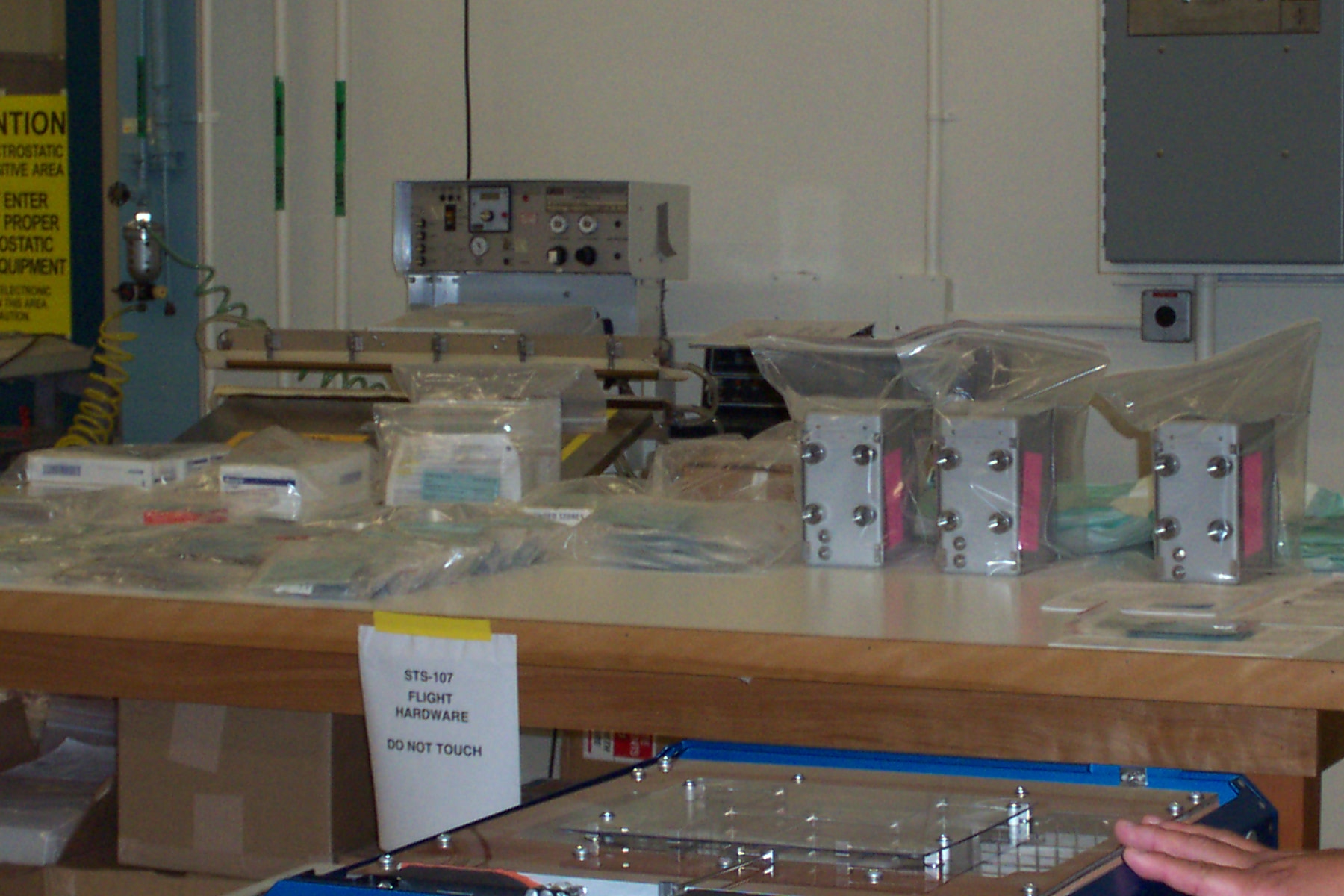
I had never met any of the astronauts who flew on either the Challenger or the Columbia.  However, I do have a personal connection that made the Columbia accident very real to me.  In the summer of 2002, while attending a NASA Educational Workshop at NASA Ames Research Center, we were briefed on some of the life science experiments scheduled to fly on STS-107, the designation for what would become Columbia’s last mission.  The briefing included a viewing of some of the hardware for the experiments.  This hardware eventually became some of the debris scattered across Texas and Louisiana.  When the news broke about the accident, I brought out the photographs I had taken.  While this connection served to make the accident more real to me, creating a much greater emotional connection to the loss, it also served to strengthen my resolve that human exploration of space is a necessity, even with the associated risk.

DCP_0229 OLYMPUS DIGITAL CAMERA

For me, this is the message in Interstellar,  never give up the quest to go farther, go higher, to find that one crucial piece of information necessary to advance human knowledge and ability to do more.  To give up is to sentence ourselves to a stunted life as a species without growth.  Unfortunately there are many among us who would have us stay put, and deny the necessity of exploring, as well as the need to act to take care of the planet we live on.  Without action now, the likelihood of a future such as in the early parts of Interstellar, is very real.  And perhaps that is the real message: act now to avoid having to depend on the heroism of future generations to save humanity from what we have wrought.  Let the current heroes, the scientists, the astronauts, the test pilots do what they do best, pushing the boundaries of our knowledge and abilities into actions that shape the future.


Posted in Space Exploration | Tagged | Leave a comment