Probing for Understanding

“Be very, very careful what you put into that head, because you will never, ever get it out.” – Attributed to Cardinal Thomas Wolsey (1473-1530)

As with most quotes, the one above is surely taken out of context. Educators like it because it speaks to them of the importance of conveying accurate content to learners during a course of instruction, lest erroneous prior conceptions get reinforced, or new ones formed. The short film A Private Universe debuted in 1987, and immediately became an important resource to help educators understand the importance of learner engagement in hands-on activities to forestall, and correct, misconceptions they hold related to natural, particularly astronomical, phenomena. The film starts with the now-famous scene at a Harvard University commencement where new graduates and faculty members are asked to explain their understanding of the reasons for the seasons, and the causes of the phases of the Moon. A Private Universe showed how even the most highly educated can have enduring misconceptions, and how traditional science instruction does little to replace them.

Educators at every level have a pretty good idea of what prior conceptions learners bring with them, important knowledge when designing educational experiences.   In a formal classroom environment, the educator has the added benefit of having more time to probe learners’ ideas, and using what they glean to make adjustments to their instructional plan. One of the easiest strategies in the classroom involves the use of a “formative assessment probe,” where learners are presented with a description of a phenomenon, and a set of responses from which they have to select the one they agree with the most. Learners are also asked to provide a reasoned explanation for why they agree with their selected response.

Probes such as these are useful when working with both pre- and in-service teachers during a professional development workshop. Not only do they serve to engage the teachers in educational best practices, it also allows us to have a better understanding of the misconceptions they have about astronomical concepts and phenomena. During a recent visit to a science methods class for pre-service teachers in an elementary credential program, the following probe was used:
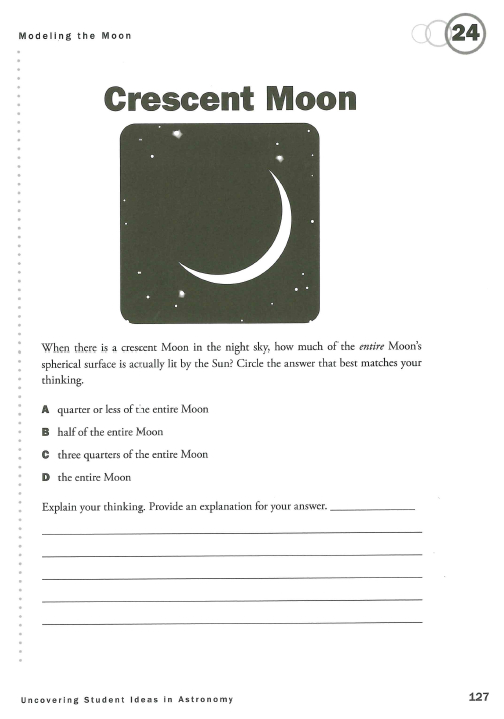
crescent moon probe copy

This probe is found in: Uncovering Student Ideas in Astronomy, by Page Keeley and Cary Sneider. 2012. NSTA Press. Arlington, Virginia

Much as the Harvard graduates had misconceptions about the causes of the phases of the Moon, many of the prospective teachers in the class had their own. This particular probe was selected to discover their mental model of how much of the Moon is lit at any time, and what it would look like if we are unable to see the fully lit side from Earth. Elementary teachers, let alone prospective elementary teachers, seldom have an extensive background in science, so it was not surprising to discover most of the students had uncertainty about how much of the Moon is lit at any time. A couple of the students had the misconception the dark part of the Moon was because of the Moon passing into Earth’s shadow. One student asked why we could not see stars through the transparent darkened portion of the Moon.

Following the probe, students were given white polystyrene balls, with only a single light bulb for illumination, and were asked to test their ideas. They were able to model how much of their “moon” was illuminated at any time, and to observe how it would look at different positions as the ball orbited their heads.

The results were amazing! Combining the formative assessment probe to determine the learners’ current mental models, with a modeling activity produced a significant conceptual shift to eventually provide fertile ground for an accurate understanding of phenomena to include phases of the Moon, and solar and lunar eclipses. When asked if their understanding depended on the hands-on modeling experience, the response was a unanimous YES! And, they became more likely to affect a change in student understanding once they have classrooms of their own.

At the end of the sessions, these university students reflected on their experience:

I used to think… the moon just turned dark; but now I know… that it is it’s own shadow.

I used to think… the shadow on the moon was the earth; but now I know… it’s the moon’s own shadow.

I used to think… that the part showing on the moon was the only part lit by the sun; but now I know… that half is always lit and it’s all about perspective.
 

The Astroteacher and Page Keeley are co-presenting at the 2016 NSTA conference [www.nsta.org/conferences/national.aspx] in Nashville (March 31–April 3) and will focus on the use of probes to support eclipse modeling activities.

This post originally appeared in the Education Matters column of the winter 2016 issue of Mercury Magazine, published by the Astronomical Society of the Pacific.

Posted in Astronomy, Education Matters, Science Education | Leave a comment

Climate Change is Kind of Like Thanksgiving

The Little Things that Change the World, part 2

As if brandishing a snowball on the floor of the US Senate wasn’t enough to demonstrate a lack of understanding of basic science, let alone climate science, Senator James Inhofe is set to travel to Paris in December taking with him the message Republicans intend to unilaterally sabotage any agreement the world comes to for dealing with human-induced climate change.  While the snowball stunt exposes a fundamental misconception about winter and the affect of Earth’s axial tilt, the overall denial of humankind’s ability to impact the global system is ignoring the history of the Earth.  A history readable in the geologic record.

In part one, we examined the impact the innovation of photosynthesis in single-celled organisms had on the Earth during the Precambrian, an impact absolutely essential for the evolution of multicellular life, including that of a bipedal, large brained species of primate we know as Homo sapiens.  In this installment, let’s take a look at what happened during the middle Paleozoic.

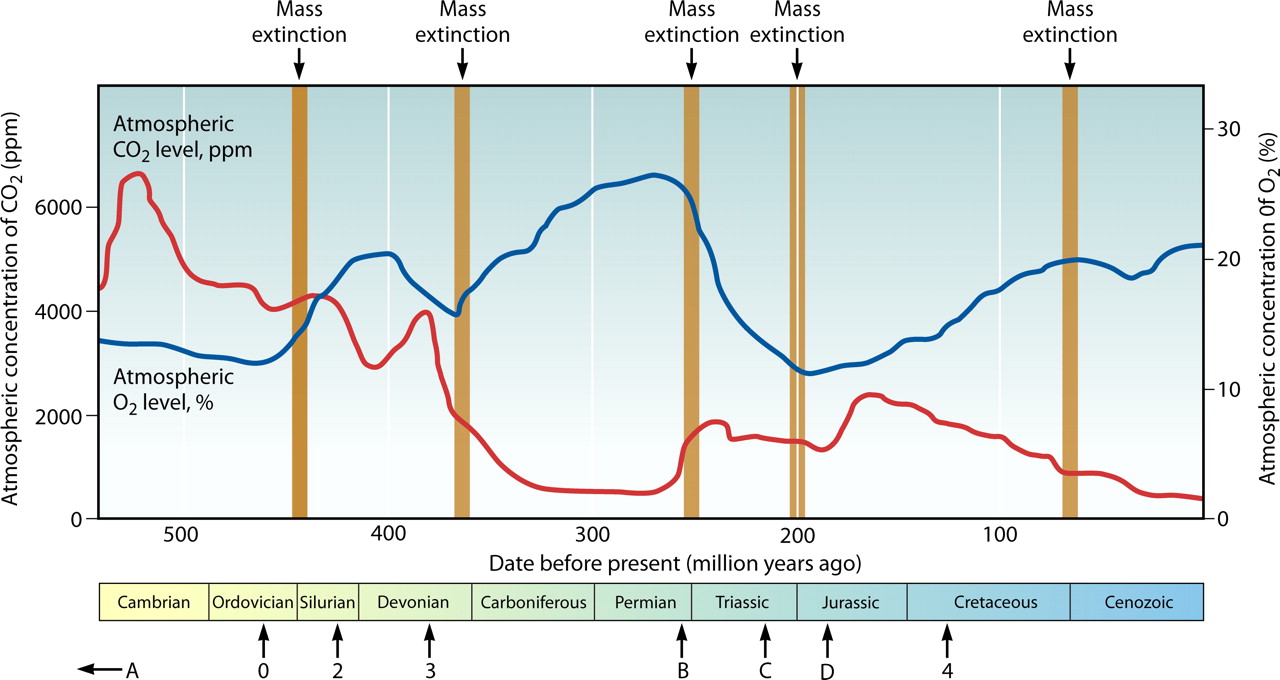
The record of atmospheric composition in the Precambrian indicates few large scale changes in the amount of oxygen and methane.  Carbon dioxide does seem to exhibit a steady downwards trend until a couple of upward curves towards the end of the Era.  In contrast, the Paleozoic Era displays significant fluctuations in both the oxygen and carbon dioxide concentrations.  See the graph in part one.  Focusing in more closely on the Paleozoic and up to the present, one can notice some significant trends:

Changes in atmospheric oxygen and carbon dioxide since the end of the Precambrian. Image: Dorell and Smith, 2011; ec.asm.org

Changes in atmospheric oxygen and carbon dioxide since the end of the Precambrian. Image: Dorell and Smith, 2011; ec.asm.org

There is a direct relationship between the evolution of life, its distribution on Earth, and the concentration of oxygen and carbon dioxide in the atmosphere.  The inverse relationship between the increase of oxygen/decrease of carbon dioxide is likewise directly related to the prevalence and distribution of life.  It is important to remind ourselves of the general difference between plants and animals.  Plants tend to take in carbon dioxide, and give off oxygen.  Animals, on the other hand take in oxygen and give off carbon dioxide.  The interplay between plants and animals, and their relative abundances influences the overall composition of the atmosphere.

A few points in time indicated by arrows at the bottom of the chart are particularly noteworthy: early land plants (embryophytes) made their appearance at point 0; vascular plants first appeared at point 2; conifers at point 3; and flowering plants at point 4.  The lettered arrows are related to events having to do with the lineage of algae.  At each of the points, particularly those in the middle-Paleozoic, an abrupt decrease in carbon dioxide is coincidental with an important event related to the evolution and distribution of plants.  The innovations allowed the plants to take advantage of empty niches, rapidly spreading across the Earth.  The sheer volume of trees and other plants depleted the atmosphere of carbon dioxide, at the same time as enriching it in oxygen.  The Carboniferous Period is aptly named, as the vast forests eventually became the extensive coal beds we mine today to fuel an industrialized society.

At the same time, particularly in the Devonian and early Carboniferous (I learned it as the Mississippian Period), extensive reefs in the shallow seas surrounding continents and islands were built.  The primary builders of these reefs were corals, animals with a calcium carbonate (CaCO3) exoskeleton.  These coral reefs therefore also became vast storehouses for sequestered carbon dioxide as the corals extracted it from the oceans to build their skeletons.

This uptake of carbon dioxide into the structures of plants on the land, and corals in the sea, resulted in a significant decrease in the amount of carbon dioxide in the atmosphere.  All of that formerly atmospheric carbon dioxide was sequestered in the rocks!  And it is a tremendously large amount of carbon dioxide, in rocks from tens of millions of years of plants living and dying, reefs getting built and buried.

The implications for our modern society relate to both reservoirs of fossilized carbon dioxide.  Humans are actively mining the old Paleozoic forests we now find as coal beds.  Those 300 million year old trees (along with younger coal beds from the Cretaceous and Tertiary Periods) are burning in power plants in countries around the world, returning the sequestered carbon dioxide to the atmosphere.  When this carbon dioxide, as well as the small amounts of sulfur dioxide formed when the sulfur in the coal burns, combine with water in the atmosphere, and in surface waters it forms mild solutions of carbonic acid and/or sulfuric acid.  Falling on the fossilized reefs exposed on land, and in contact with active reefs in the ocean, the acid reacts with the calcium carbonate, liberating small amounts of carbon dioxide.  This is on top of the impact of more acidic ocean water on the ability of reefs to survive, a topic for another day.

Returning to our original premise and Sen. Inhofe’s statement humans are incapable of impacting Earth’s climate.  Trees and corals, organisms of lesser status in Inhofe’s worldview, had a tremendous impact on Earth’s climate, causing changes taking place over several hundreds of millions of years.  And now in our modern age, we are taking the records of those many years and exposing and dissociating them in a time 0.0000005 as long as it took those deposits to form.

It does not take a scientist to understand the implications of releasing over 200,000,000 years of carbon dioxide sequestration in 100 years.  Today is Thanksgiving, a day given to overindulging, eating several days worth of calories in a single meal.  Now imagine all the Thanksgiving meals you have ever eaten and put them on the table before you.  Eat them all, today.  The analogy is apt, as our modern society overindulges without thought for the consequences of figuratively eating tens of millions years worth of carbon in a single day.  We are treating the Earth and its climate as if we were consuming all those meals in a single day, rather than spread out over a lifetime.  It is past time to get off our addiction to fossil fuels, to go on a diet through enacting sensible regulations to limit future emissions of carbon dioxide into the atmosphere.  We just might have something left for the future.

Posted in Climate Change, Earth History, Environmental Issues | Tagged , | Leave a comment

The Little Things that Change the World

“…the Genesis 8:22 that I use in there is that ‘as long as the earth remains there will be seed time and harvest, cold and heat, winter and summer, day and night,’ my point is, God’s still up there. The arrogance of people to think that we, human beings, would be able to change what He is doing in the climate is to me outrageous.”

– Sen. James Inhofe, 2012

This past winter, once again Sen. Inhofe cited the bible as evidence for the inability of humans to impact the global climate while brandishing a snowball on the floor of the senate.  The true arrogance here is in the position Sen. Inhofe and others have taken denying the extensive evidence science has brought forward in favor of a literal interpretation of an ancient religious text.  To suggest humans are too small to cause such an effect is to ignore the changes in the Earth’s atmosphere throughout geologic time.  The reality is in the data gleaned from the rock record.  Though in some ways we have to give Sen. Inhofe and likeminded people credit for consistency as they also deny the age of the Earth, attributing the vast majority of geologic phenomena to a global flood event taking place less than 10,000 years ago.  This stance makes it particularly difficult to engage with Sen. Inhofe, et al based on the actual evidence science has brought forth.

One can summarize the evidence contained in the rock record for the composition of the atmosphere with charts such as this:

The composition of the atmosphere over time. Image: Nature.com

Looking closely, one notices the amounts of carbon dioxide and oxygen in the atmosphere have varied widely, at times on relatively short time scales of hundreds of thousands, or a few million years.

The history basically goes like this:

  1. The atmosphere of the early Earth had virtually no oxygen.
  2. A little bit of oxygen was formed due to dissociation reactions of water, however the majority of oxygen was produced as a result of early bacteria and archaea “inventing” photosynthesis, probably around 3.5 billion years ago.
    1. Fossil evidence for these organisms include stromatolites.
  3.  The oxygen combined with iron washed into the oceans from landmasses subjected to weathering.
    1. This resulted in the formation of banded iron formations of finely layered magnetite and hematite.  All of the iron our modern technology uses has been mined from these deposits.
  4. The banded iron formations stopped forming about 1.8 billion years ago, when the iron in the oceans was used up.  At this time, lacking available oceanic iron to bind with, the oxygen started to build up in the atmosphere.
  5. The advent of atmospheric oxygen led to the opportunity to bind with a new source of iron: rocks and sediments on the land.
    1. With available oxygen, these iron rich materials essentially rusted, turning the reddish hues we all recognize.  The result was a thick sequence of what are called red beds, sedimentary rocks with a distinct reddish hue.  No red beds are found older than 2 billion years.
    2. Besides the thick sequence of preCambrian red beds, another prominent set was formed during the Triassic Period.
  6. Another potential impact of the increased levels of oxygen in the atmosphere is the onset of worldwide glaciation events lasting for perhaps tens if not hundreds of millions of years, the so called “snowball Earth.”
    1. The increased level of oxygen would have reacted with the potent greenhouse gas methane prevalent in the early atmosphere to produce the less effective carbon dioxide.  This led to a rapid cooling which resulted in extensive ice sheets in low latitudes far from the poles.

The remarkable thing is this all came about because some single-celled organisms developed the ability to photosynthesize!  And the impact on Earth’s atmosphere and climate were far greater than the changes of current times brought about through the activities of a large group of multi-cellular organisms we call humans.  Amazing what adding a bit of oxygen does to the overall Earth System.  Perhaps future geologists will discover in our fossilized edifices the evidence for large scale climate change, much as contemporary scientists found a clue for past changes in ancient stromatolites.

In future posts, we take up the case of a great depletion of carbon dioxide in the mid-Paleozoic, as well as considerations for educators.

Posted in Climate Change, Earth History, Environmental Issues | Leave a comment

Musings on a Drowned Cathedral

“These temple-destroyers, devotees of ravaging commercialism, seem to have a perfect contempt for Nature, and instead of lifting their eyes to the God of the mountains, lift them to the Almighty Dollar. Dam Hetch Hetchy! As well dam for water-tanks the people’s cathedrals and churches, for no holier temple has ever been consecrated by the heart of man.” — John Muir, from The Yosemite (1912)

They built it anyway.

yosemite 5.2015 hetch hetchy morning reflection yosemite 5.2015 hetch hetchy dam

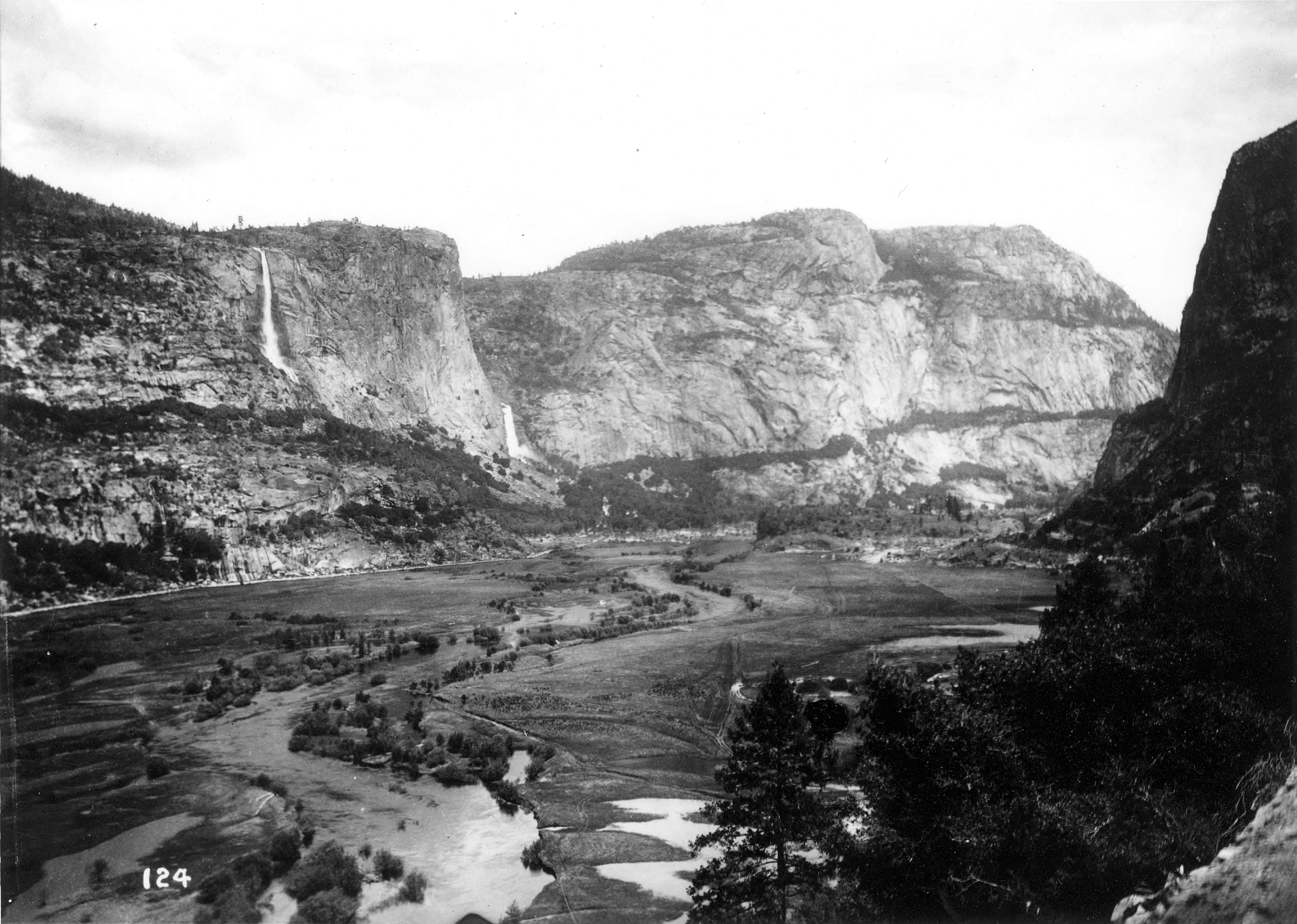
The photos and narratives do not do Hetch Hetchy justice.  To give the valley justice, one must visit, and follow the path beyond where one can see the other side of Kolana Rock from the dam.  The Hetch Hetchy is still a place of great beauty and stunning features, though these days it is difficult to imagine the valley without the inundation.

Hetch Hetchy Valley in the early 1900s. Image: Wikipedia Commons

Hetch Hetchy Valley in the early 1900s.
Image: Wikipedia Commons

Image: National Park Service

Image: National Park Service

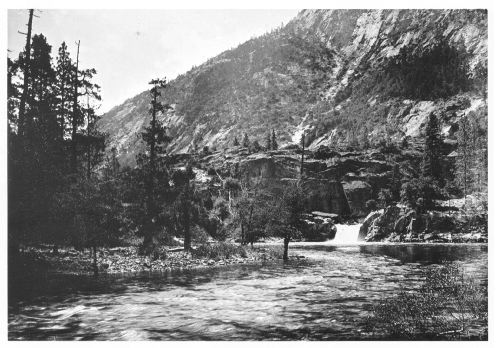
Falls on Tuolumne River at the head of the Hetch Hetchy Valley.  Image: J. N. LeConte from the Sierra Club Archives.

Falls on Tuolumne River at the head of the Hetch Hetchy Valley. Image: J. N. LeConte from the Sierra Club Archives.

I understand the perceived need for the stored water given what had recently transpired in San Francisco.  However the problem was less about adequate water to fight the fires following the earthquake as it was a broken delivery system.  They could have created their lake farther downstream, outside the boundaries of the Yosemite National Park.  One can also appreciate the ease of engineering a dam in the location chosen, at a steep and narrow canyon of the Tuolumne River anchored in granite rather than the less coherent Mariposa Formation in a likely downstream location.

As a resident of San Francisco, I definitely benefit from the relatively certain and pure water provided by the Hetch Hetchy system.  This does not negate the lost benefit of having a “second Yosemite Valley” to visit and enjoy.  Perhaps a Hetch Hetchy Valley available for public recreation would have dispersed some of the upwards of 4,000,000 visitors who descend on Yosemite, particularly the Yosemite Valley annually.

I am also fairly sure the recent movement and calls to remove the dam and allow Hetch Hetchy to restore itself to a semblance of its former glory will fall on increasingly deaf ears as the drought California is experiencing continues and deepens.  Some segments of the population would like to inundate a few more valleys, and are actively blaming the environmental community for the “water crisis,” conveniently ignoring the fact over the past four years most of the state has received less than two years worth of precipitation.

The truth is, when a place such as Hetch Hetchy is lost, all of us lose something, even if only the knowledge we could visit and experience all such places have to offer us in opportunities for recreation and reflection.  The grieving for Hetch Hetchy has not stopped  though there are likely few left alive who could recall having visited prior to the creation of the lake.  When we lose a family member or friend, we are impacted to a greater extent than for someone we don’t know, though such deaths can touch us deeply, particularly if the individual had made some lasting contribution to society.  So it is no wonder the current generation of policy makers are loathe to return this part of Yosemite National Park to something a bit closer to its natural state.  They did not know the place as it was before.  And may not even know it as it is today.  Just as with people, it is difficult to grieve for a place one does not know.

This past week I visited the Hetch Hetchy Valley for the first time, taking a 10+ mile roundtrip hike to the bridge crossing Tiltill Creek.  And while what remains above the waterline is marvelous, it surely pales compared to what it was.  Still, visiting makes it easier to grieve for the potential of what I, or anyone else, could have experienced.

In so many ways words are inadequate, so let me share a few images of my excursion.

Looking upstream beyond Kolana Rock

Looking upstream beyond Kolana Rock

The valley of Rancheria Creek

The valley of Rancheria Creek

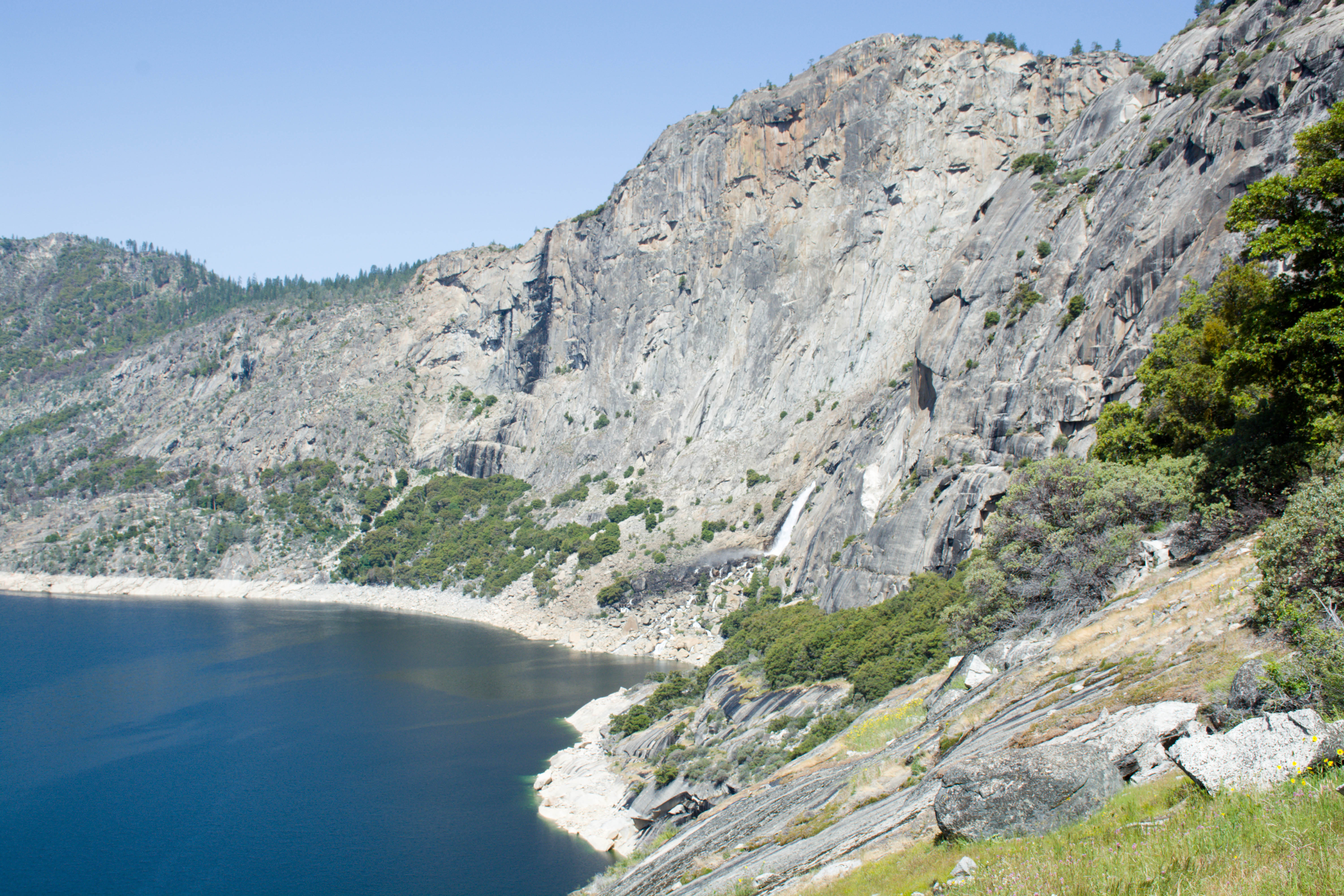
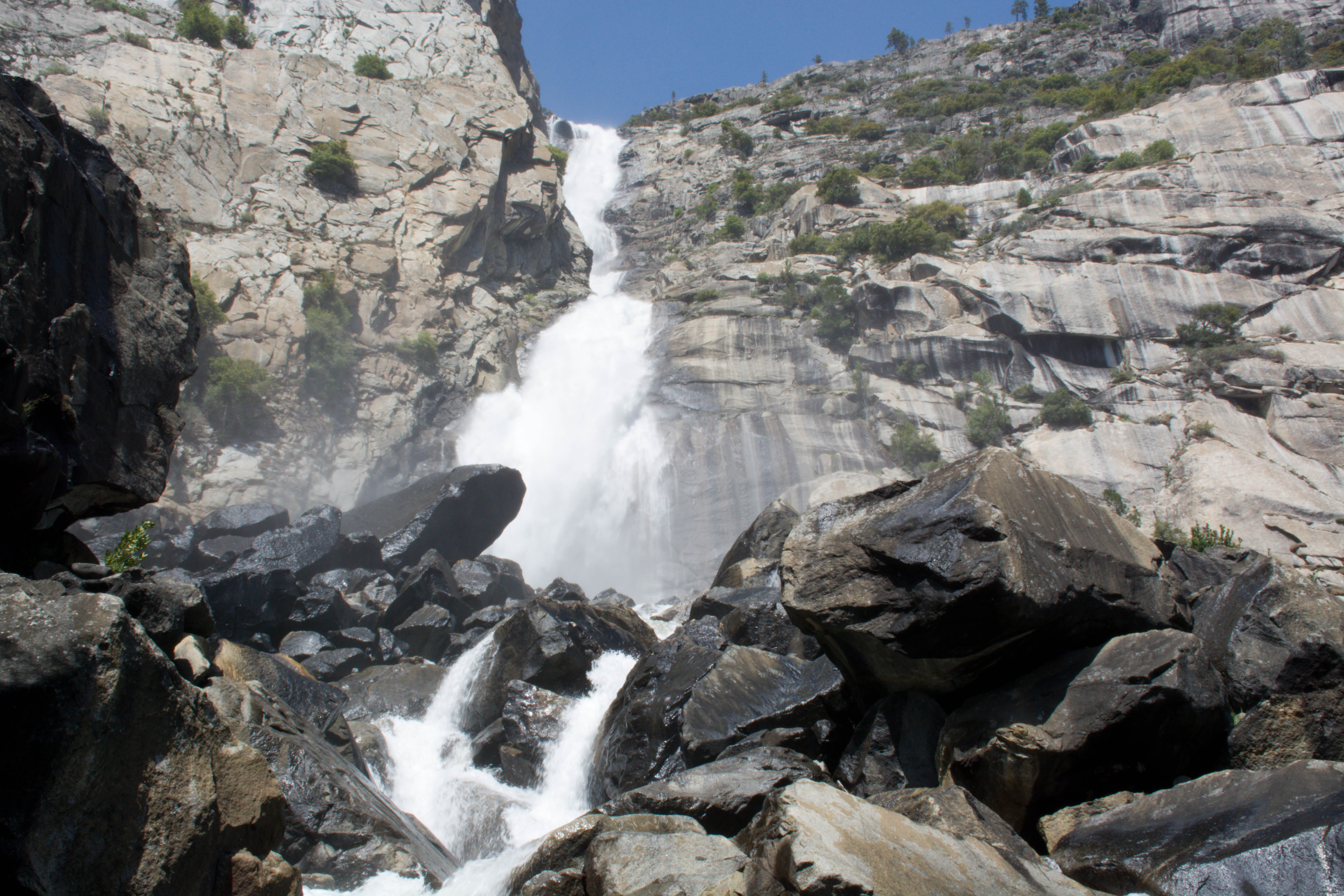
Wapama Falls rivals the waterfalls in Yosemite Valley for its grandeur and height.

Looking back west towards Wapama Falls

Looking back west towards Wapama Falls

Wapama Falls has a total drop of 1,080 vertical feet over three drops

Wapama Falls has a total drop of 1,080 vertical feet over three drops

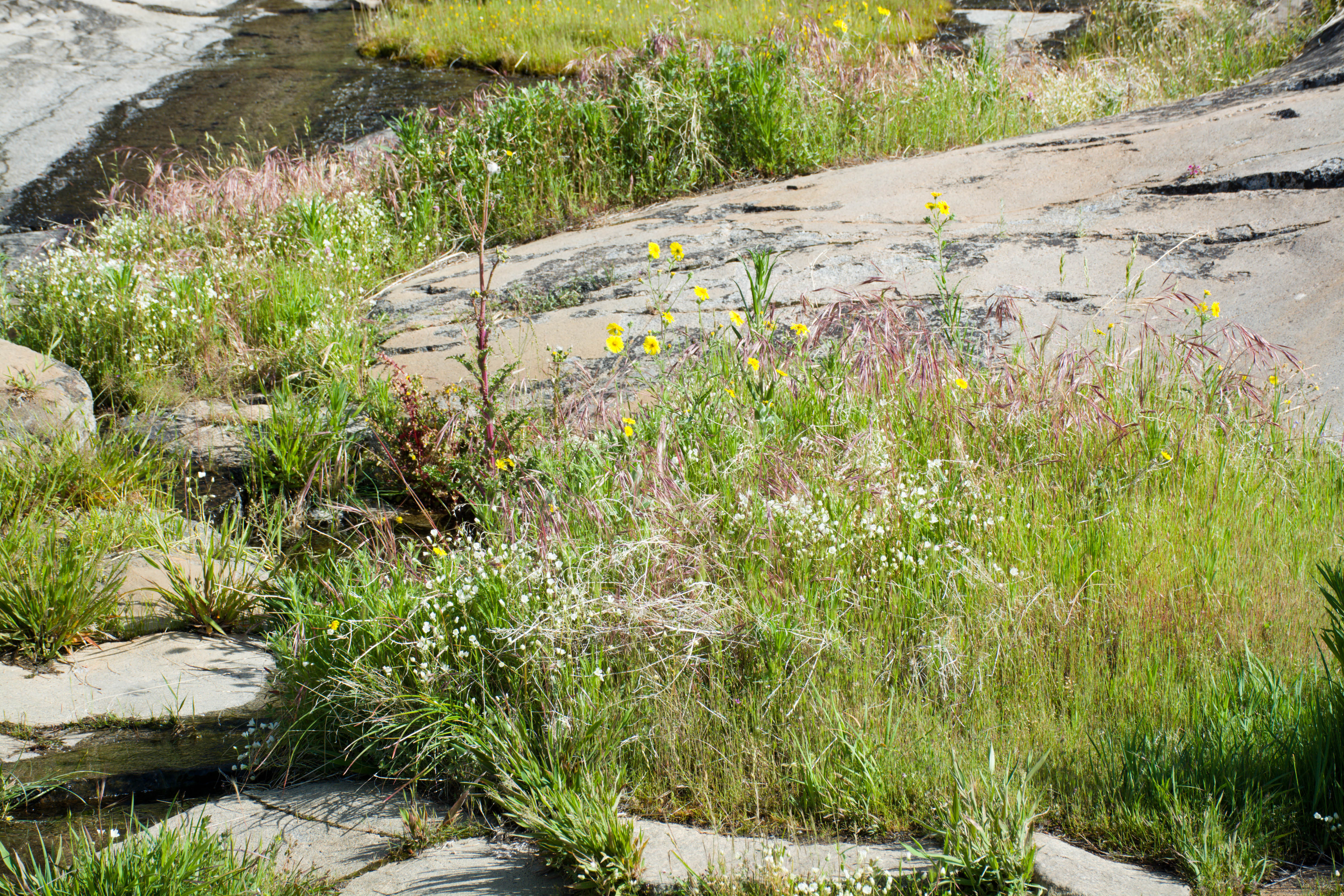
The Hetch Hetchy is known for its profusion of wildflowers in the spring.

yosemite 5.2015 butterfly on lupine yosemite 5.2015 paintbrush yosemite 5.2015 purple flowers yosemite 5.2015 two lupines

yosemite 5.2015 yellow floers and seeps

Posted in Environmental Issues, Hetch Hetchy, Yosemite | Leave a comment