A couple years ago, the theme for the annual International Observe the Moon Night was “What does the Moon mean to me?” Expressing meaning can take a lot of forms, most of them in the form of stories. Humans have long told stories about the Moon and what it means to them, their social and religious groups, and civilization in general. As we learn more about the Moon, it turns out the story incorporates much more than the personal or anthropomorphic aspects we impose on this object in the sky. The story is one of exploration and science, as the Moon has its own story to tell about its creation and relationship to the solar system and beyond. From this perspective, exploration is really just learning the story a place has to tell. And at this point in history we are starting to learn the language the story is in, and discovering how to ask the right questions.

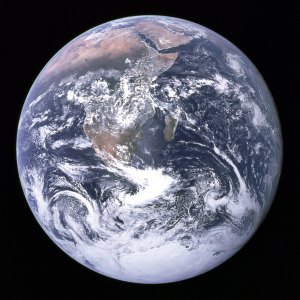
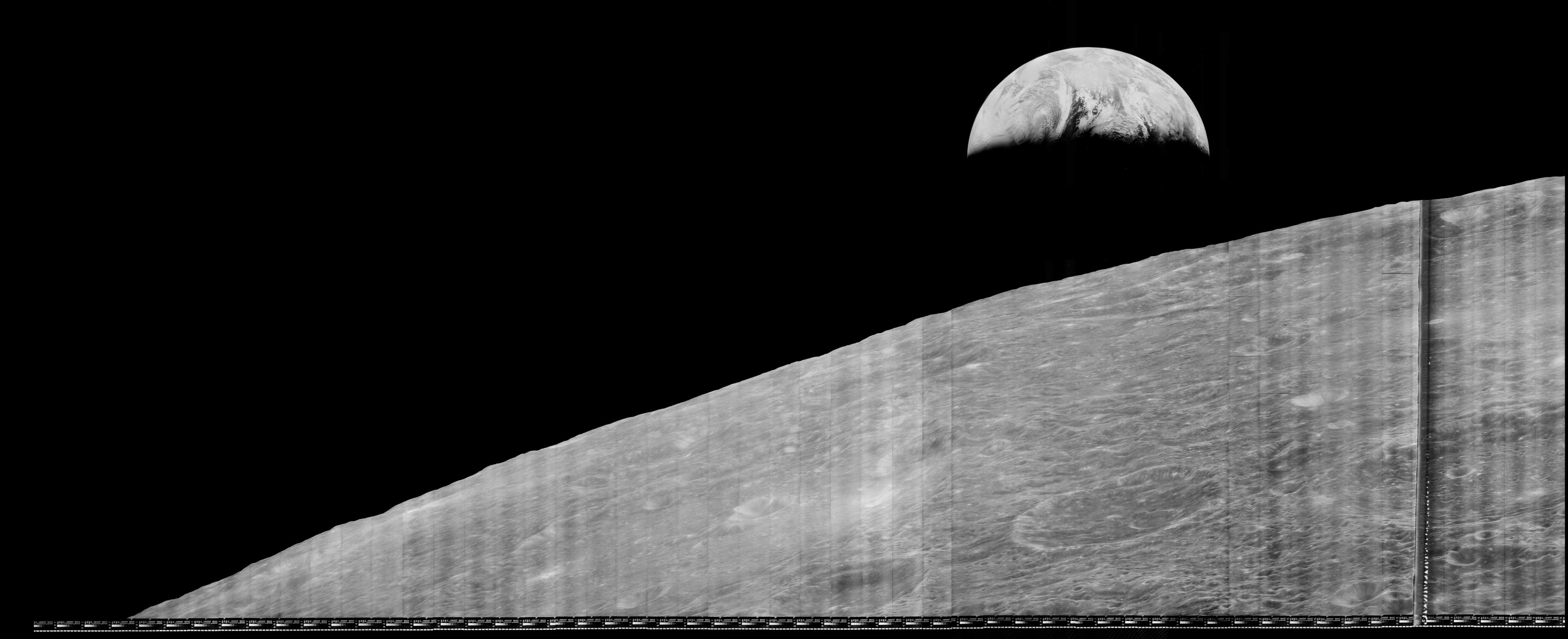
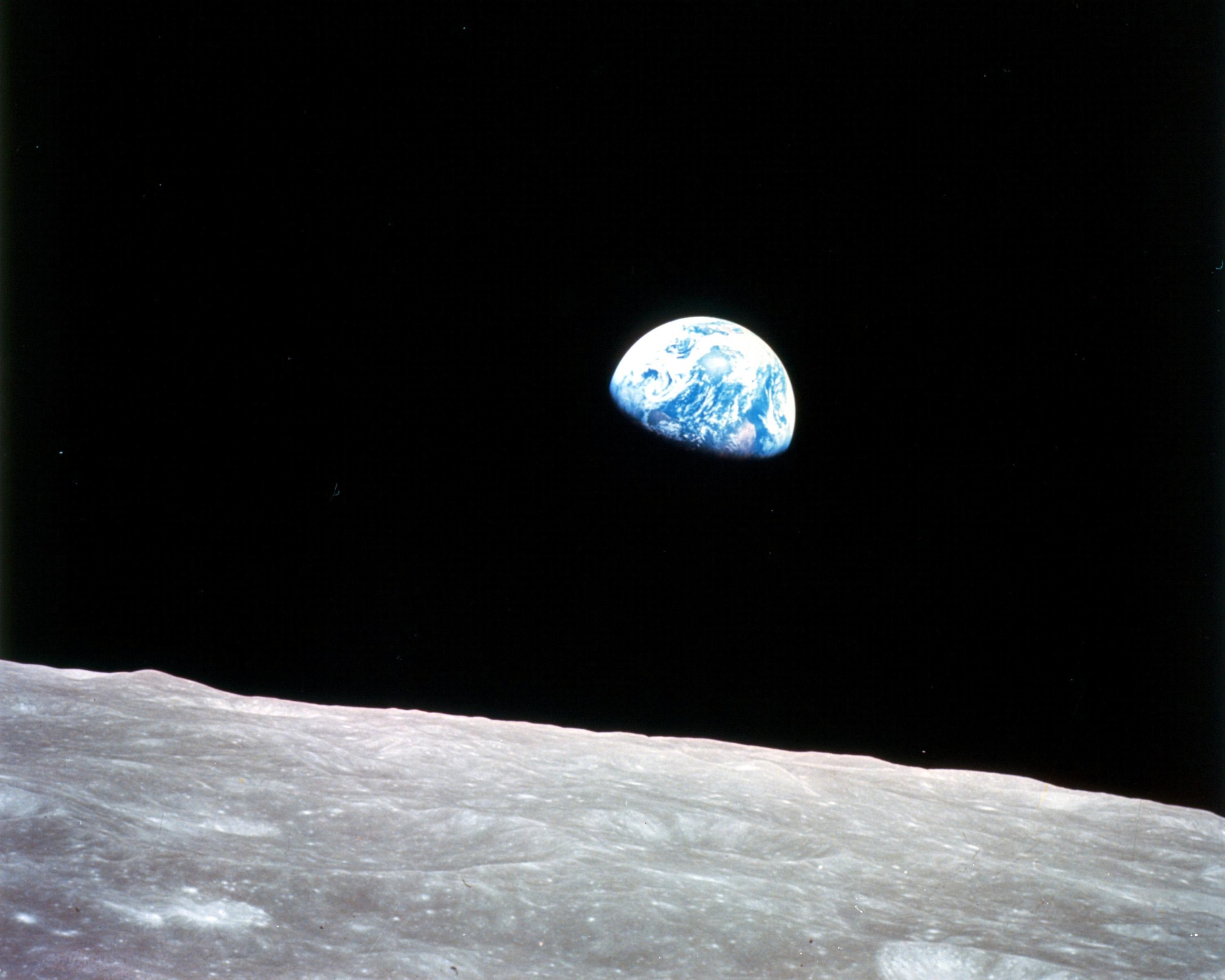
When I was young, my father brought home from work a poster of a photograph with the caption “Historic First Photo of Earth from Deep Space.” This image taken by the Lunar Orbiter 1 reversed the perspective we normally enjoy, showing a crescent Earth suspended above a lunar landscape. While significant, this initial look at the Earth from space did not enter the collective human consciousness with the same depth as a similar image taken by the astronauts aboard Apollo 8 a little over two years later. A few years later, the crew of Apollo 17 in December 1972 took the iconic image of the Earth as an entire world.

It is unknown who first looked up and pondered the Moon. There are no records. As their art attests, the Moon was important to ancient peoples. Cave drawings over 20,000 years old are the first definitive representations of the Moon and its cycle of phases. Bone carvings from 10,000 years earlier have groupings of 29 distinct notches, possibly marking the days of the lunar cycle. People needed to mark time, a means to predict the movements of the herds they hunted, and the ripening of the wild plants they gathered. As people started to live a more agrarian lifestyle it became necessary to track when to plant crops and harvest, or when to move livestock before the onset of winter storms. The lunar cycle formed the basis for early calendars, an artifact we continue to use every “moonth.”
The importance of the Moon to early civilizations led to its inclusion in the religions of day, with deities and celebrations tied to the Moon and its cycle. People told stories about the Moon, attributing its presence and phases to the actions of gods and heroes. They saw images in the pattern of craters and maria on the Moon’s surface, and imagined they were there to help in the telling of their stories. The Moon became important in the myths and legends and deeds of adventurers and monsters on Earth, as the Moon, particularly when full, brought on transformations both physical and psychological. In our modern age we still tell such stories, and though generally recognized as fantasy, the Moon has a prominent role in, amongst others, the popular Harry Potter and Twilight series of movies, with humans transforming into werewolves at the sight of the full Moon, and the light of the Moon having magical qualities. People continue to have a sense of the magical when finding themselves on a dark night lit only by the Moon. Romantic scenes in real life as well as in film commonly involve a moonlit night. The Moon is also associated with human psychological behavior, as we commonly refer to irrational acts as “lunacy.”
So even in our modern scientific age, myths and legends persist, with the Moon figuring in misconceptions about its appearance and effect on human behavior. From time to time the Moon is the subject of hoaxes and misunderstandings of physical reality, becoming a part of modern legends. For instance a few years ago an image was circulated on the Internet of the crescent Moon and setting Sun from the North Pole. Amongst the many erroneous elements in the image was an incorrect understanding of the scale size of the Sun and Moon, as well as the observed positions of both from the claimed reference point. Other misunderstandings surrounding the Moon include the Mars hoax, which for several years after the 2003 Mars opposition claimed the planet Mars would appear as large as the full Moon on August 27. On August 27, 2003 Mars made its closest approach to Earth in 60,000 years, coming to within 56 million kilometers. While the naked-eye view was far smaller than that of the Moon, the close opposition provided great views through even backyard telescopes. Every year thereafter the hoax has made the rounds of the Internet, saying Mars would (again) be as large as the full Moon, ignoring everything known about orbital dynamics, distance and scale. Another misconception involving scale is the Moon illusion, where the Moon appears larger when it is rising then when overhead. If measured even informally, it is easy to demonstrate the apparent size of the Moon in the sky remains relatively constant. Observable differences in measurable size do exist owing to the elliptical nature of the Moon’s orbit around the Earth, though differences are usually small. Approximately once every 14 months the full Moon coincides with perigee, the closest point in the Moon’s orbit to Earth. At these times a “super” or perigee Moon will appear up to 14% larger and 30% brighter than “normal.” The last instance of a “super” Moon was in September 2014. Other common misconceptions include the idea the Moon has a “dark side” which never experiences sunlight. Related to this is the notion the Moon does not rotate because we always see the same side. In fact, the Moon does rotate, with its rotational period equivalent to its period of revolution around the Earth.
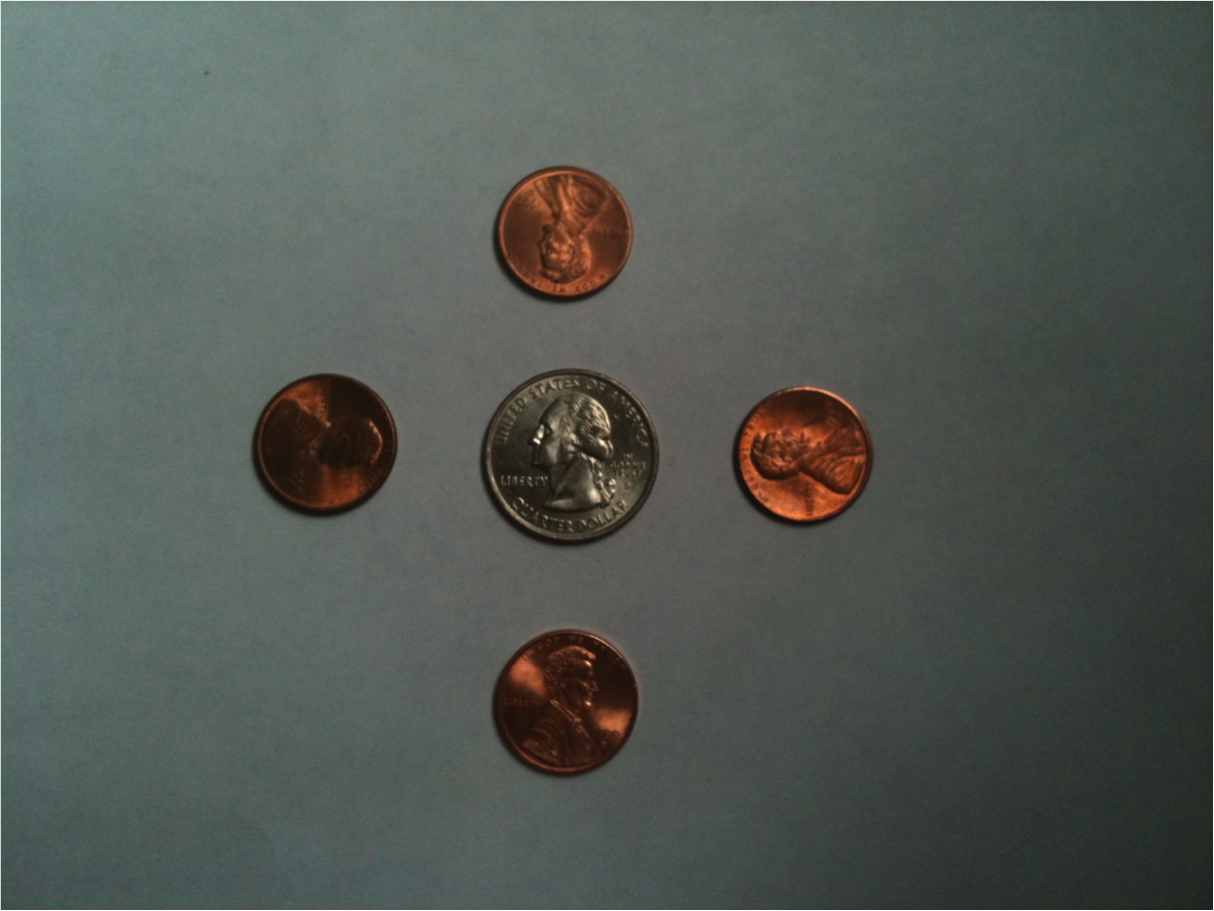
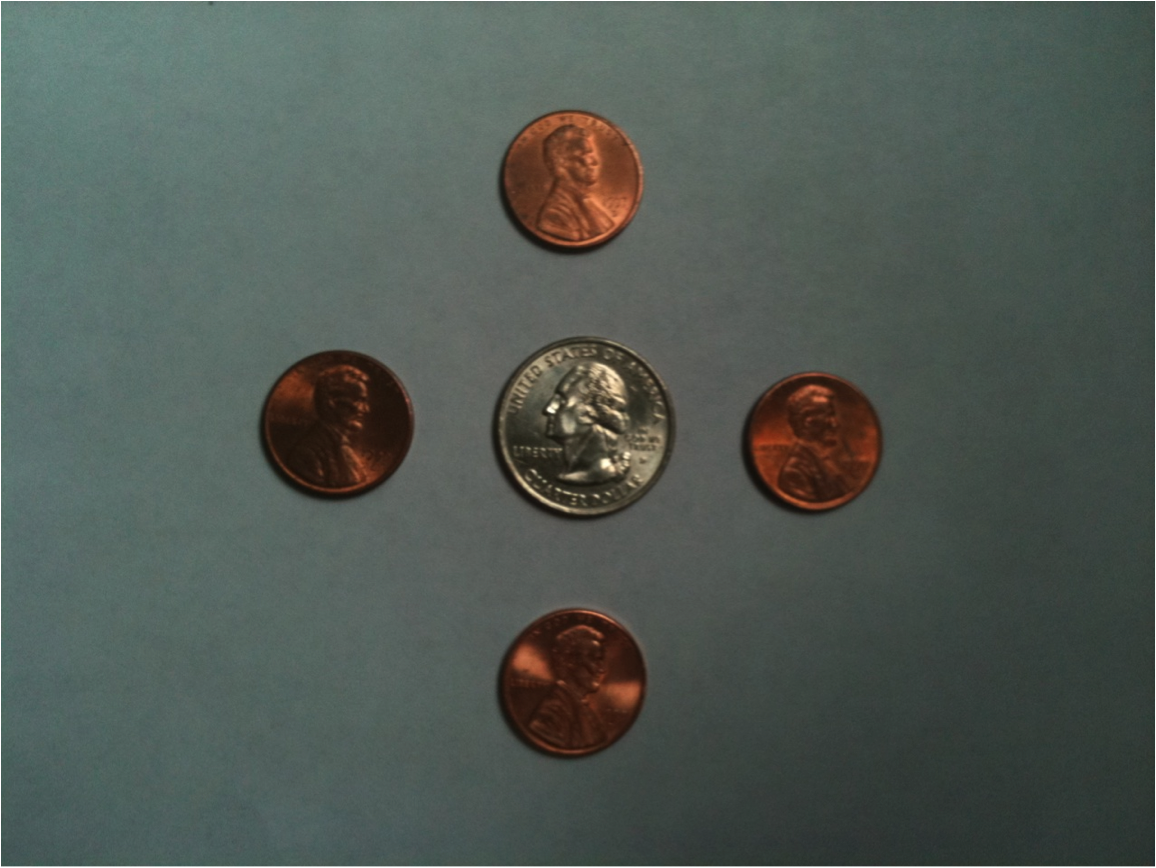
Try this: take one quarter and four pennies. Place the quarter on a tabletop with the pennies surrounding it equally to the top, left, bottom and right. Orient the pennies so the top of Abraham Lincoln’s head is always pointed directly at the quarter. In this model the Moon revolves around the Earth in a counter-clockwise direction. Compare the direction Lincoln is looking in each position. Relative to a set point outside the Earth-Moon system, has the Moon rotated? If the Moon were not rotating, how much of the Moon would we see from Earth during a “moonth?” Compare how much of the Moon one would see from Earth in the scenario in the top photo with how much one would see from Earth in one below.
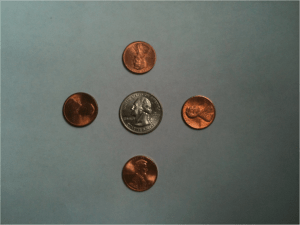 The same side of the Moon always faces the Earth, is the Moon rotating?
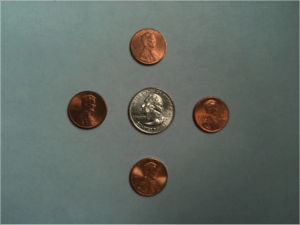 Is the Moon rotating? How much of the Moon would we see from Earth if the Moon always faced the same reference point in space?
Another very persistent hoax has to do with the Apollo mission lunar landings. Many people insist the landings were faked, and actually took place on a Hollywood sound stage, or at Area 51.
All of these stories ignoring or stretching the truth have served to distract people from the very real science taking place. The story of the Moon emerging from modern science and the explorers, human and robotic, which have landed and/or orbited the Moon is every bit as exciting and fantastic as those told by our ancestors sitting around their fires.
In 1865 Jules Verne published his novel From the Earth to the Moon. One of the first science fiction novels, the book piqued the imagination of many people, and inspired authors such as H.G. Wells, and the first science fiction film A Trip to the Moon, produced in 1902. These served to propel into the imagination the idea of the Moon as a place to actually travel to and explore. Throughout the early to mid 20th century the theme of traveling to the Moon was common in books and film: the modern equivalent of the ancient storyteller traveling from place to place entertaining people with tales of heroes and their adventures.
As technology developed, and much of what was science fiction was turning into science fact, scientists and engineers started to reach towards the Moon. With the success of Sputnik 1 in October 1957 by the then Soviet Union, the space race was on. Many of the missions over the following decades were as much skirmishes in the Cold War as opportunities for exploration.
The first lunar probe, the Soviet Union’s Luna 1, sailed past the Moon on January 4, 1959. Two months later the United States responded with their own lunar mission as Pioneer 4 had its flyby on March 4. As the decade progressed the ability of these early robotic explorers became more sophisticated. The next thing to try was impacting the Moon. The Soviet Luna 2 probe was the first, on September 13, 1959. The American Ranger 4 finally did on April 26, 1962.
After learning how to flyby and impact the Moon, it was time to try something different: landing on the Moon. After a failed attempt by Luna 6 in 1965, on February 3, 1966 Luna 9 accomplished the first soft landing. Two months later on April 3, Luna 10 achieved the next goal: putting a probe into lunar orbit. The Americans lagged behind with their Surveyor probes landing successfully four times, and five Lunar Orbiters circling the Moon between 1966 and early 1968. It was during this time that historic first photograph was taken, changing our perspective forever.
It was not enough to just send robotic explorers to the Moon. The goal was to develop the ability so people could travel to the Moon, and return safely to the Earth. Yet another a technological leap was called for. Zond 5, an unmanned probe, safely returned to Earth on September 21, 1968. Three months later in late December, Apollo 8 with a crew of three, orbited the Moon ten times and returned safely to Earth. This success was followed with the landing of Apollo 11 on July 20, 1969. Both of these events have entered into modern lore, with people remembering where they were when they watched the view of Earth from the Moon during TV broadcasts from Apollo 8, and the grainy images of Neil Armstrong’s first steps on to Moon. Over the next three years, five more Apollo missions landed and explored the Moon. Even the failure which became a success of the Apollo 13 mission has taken on the mystique of the heroic tale, immortalized in book and film featuring the stars of the day.
Though the Soviet Union did not find success at sending humans to the Moon, they continued to develop new technology with the first robotic sample return from the Moon by Luna 16; and the first robotic rover to traverse the lunar surface, Lunokhod 1. Both missions took place during the fall of 1970. By 1976 and well over 60 missions between them, the heyday of lunar exploration was over as budget constraints and shifting priorities called a halt to the effort by both countries.
It took almost two full decades for anyone to return to the Moon. In January 1990 the Japanese probe Hiten went to the Moon, although its transmitter failed and no scientific data was returned. The United States had two successful orbital missions to the Moon in the 90s: Clementine and the Lunar Prospector. Both missions returned images used to make the first complete map of the Moon. On July 31, 1999, Lunar Prospector was sent to impact a crater at the Moon’s south pole in an effort to locate water. The effort was unsuccessful and confirmation had to wait for the LCROSS mission a decade later.
The early years of the 21st century saw a multitude of missions from an array of countries: India, China, Japan, and the European Space Agency. A great deal of science was returned, including the discovery of water in lunar soils (Chandrayaan-1/Moon Impact Probe), and water in shadowed craters at the poles (LCROSS). Other discoveries from lunar missions include: the composition of much of the Moon is virtually identical to Earth’s mantle, suggesting a common origin; later studies indicate the Moon was formed as a result of an impact of a Mar-sized object with the early Earth, with the resulting debris coalescing into the Moon; the presence of a tenuous lunar atmosphere, including a dynamic dust environment associated with the terminator; a potential explanation for the disparity between the smoother, maria rich near side of the Moon with the more heavily cratered and hilly far side; models suggest there were two objects orbiting Earth, which collided without complete assimilation between the two causing the two hemispheres to have different topographies. More recent missions studied the lunar atmosphere (LADEE), and its interior (GRAIL). Future missions will contribute to our knowledge about the Moon, including refining the estimates of the quantity of water in the soil and shadowed craters.
These missions will add to the story of the Moon, answering many of the questions from previous explorations, and will surely give rise to questions we cannot anticipate. The biggest question of all is perhaps how will people react to a sustained presence on the Moon? The technology exists to build a living environment on the Moon. To make such a place a reality will take the will of countries and their peoples to make it a reality. Does the exploration of the Moon and a long-term presence have enough meaning for humanity as a whole, or in part? Only time will tell.
The Moon has meant many things to many people throughout history. The Moon’s meaning to societies has evolved as technology and our ability to explore have become more sophisticated. However the meaning of the Moon to us as individuals has remained fairly constant. For most of us the Moon is a place of wonder, an anchor and participant in the stories we tell and in our dreams. The Moon is our first introduction to the wonders beyond Earth, and has the potential to serve as the first step towards the universe.
At some point in the not to distant future, humans will again walk and work on the surface of the Moon. Turning their gaze upwards, they will see the shining Earth in the black lunar sky, and ponder. As it turns out, the question that really matters is “what does the Earth mean to me?”




 Musings on the Planet